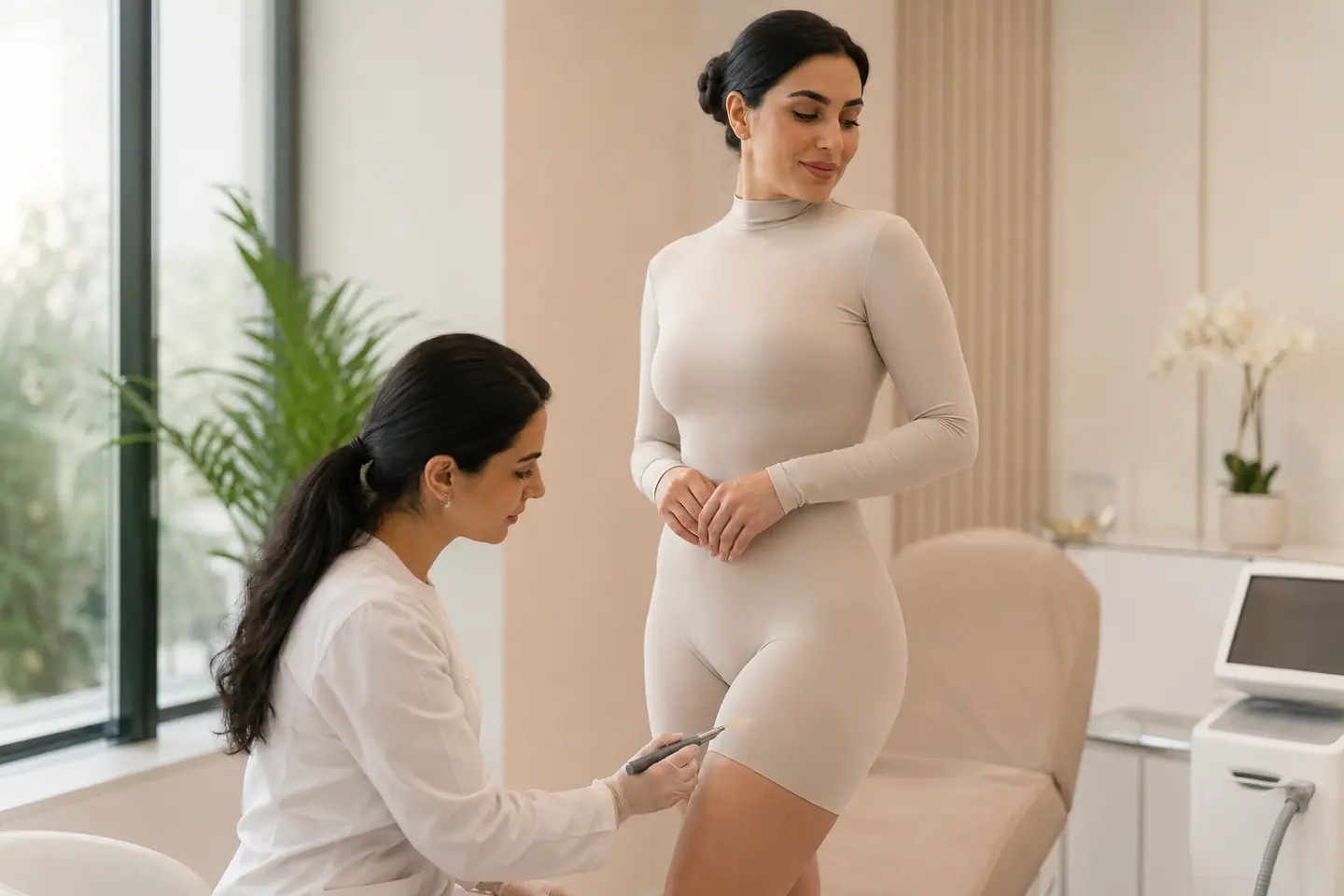
Endolift uses a very fine optical fibre passed beneath the skin to deliver laser energy to the subdermal tissue. It is promoted for collagen remodelling, selective fat treatment and skin contraction. Because it can often be performed using local anaesthetic, some patients describe it as an awake, scarless and pain-free alternative. Those words need careful qualification.
Can Endolift be performed awake?
The treatment may be carried out while the patient is awake with local anaesthetic, depending on the area, extent, medical history and clinician’s protocol. Awake does not mean no anaesthesia, and it does not guarantee no discomfort. Patients may feel injections, warmth, pressure or brief stinging. Anxiety or a larger treatment area may require a different anaesthetic plan.
The fibre enters through a tiny skin opening rather than a surgical incision. This usually means no long scar, but “scarless” is not an absolute promise. A small entry mark, bruising, swelling or temporary skin discolouration can occur.
Can it lift the breast?
Energy-based tightening may create a modest improvement in skin firmness in carefully selected patients with mild laxity. It cannot remove substantial excess skin, move a low nipple to a higher position or reshape a significantly drooping breast in the same way as mastopexy. When true breast ptosis is present, a surgical lift remains the more predictable option despite its scars.
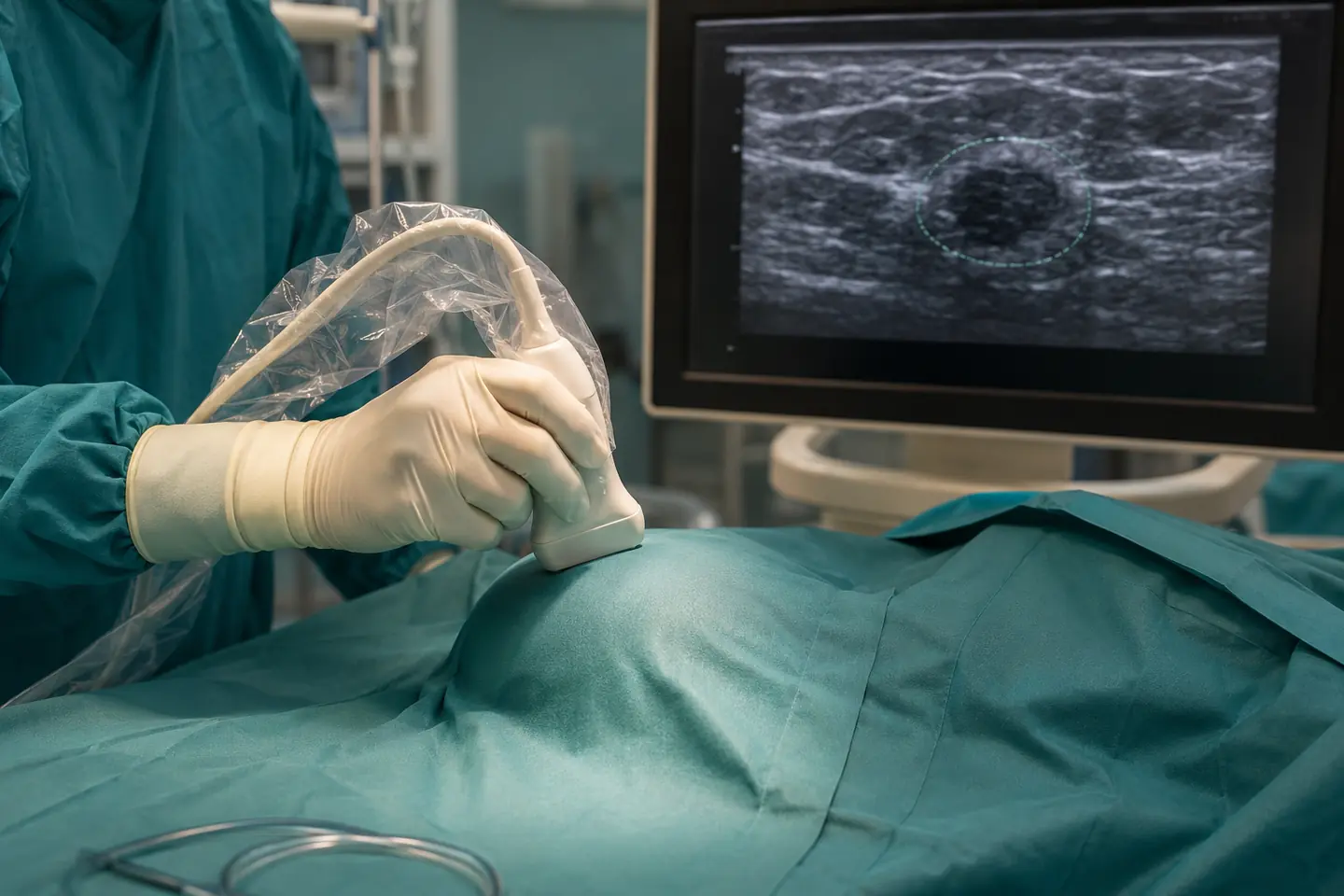
Breast tissue also requires careful assessment before any cosmetic energy procedure. A new lump, nipple change or unexplained symptom should be investigated first. The treatment plan must avoid injury to the skin, gland and any implant.
What about cellulite on the legs?
Cellulite is caused by the interaction of fibrous bands, fat lobules, skin thickness and connective tissue. Subdermal laser energy may improve the appearance of selected dimples or local laxity, but it does not remove cellulite permanently and results vary. Weight, skin quality, hormonal factors and the pattern of fibrous tethering all influence response.
Published Endolift literature has focused mainly on facial and local contouring indications. Systematic reviews report encouraging changes but also emphasise the need for stronger clinical studies. Evidence specifically for breast lifting and leg cellulite is not yet as robust as the advertising may suggest.
Risks and recovery
Possible effects include tenderness, swelling, bruising, redness, numbness, temporary firmness and contour irregularity. Less common but important risks include burns, skin injury, infection, pigmentation change, prolonged pain or unwanted fat loss. Results develop gradually as swelling settles and collagen remodels; more than one treatment may be discussed, and improvement is not guaranteed.
Aftercare varies by area and energy used. Patients may be advised to limit strenuous activity temporarily, protect the skin and attend review. Increasing pain, blistering, spreading redness, discharge, fever or a marked contour change needs prompt clinical assessment.
Who may benefit?
The most suitable patient has mild, localised laxity or contour concern, stable weight, healthy skin and realistic expectations about a subtle improvement. Endolift should not be presented as a replacement for breast-lift surgery or as a cure for cellulite. Consultation should compare it with observation, exercise and weight stability, other energy devices, subcision-based cellulite treatments, liposuction or surgery where appropriate.
The honest conclusion
Endolift can be a minimally invasive, awake option that avoids a long surgical incision, but no procedure can responsibly be guaranteed pain-free, scar-free or complication-free. For breast skin and leg cellulite, careful selection and transparent discussion of the limited evidence are essential.
Sources reviewed
PubMed — Systematic review of Endolift laser efficacy and safety: https://pubmed.ncbi.nlm.nih.gov/38886198/
PubMed — Review of Endolift effectiveness, safety and adverse events: https://pubmed.ncbi.nlm.nih.gov/39827299/