Searching for the “best breast surgeon in Cairo” is understandable, but no single title, advertisement or social-media following can identify the right surgeon for every patient. A better question is: who has relevant training and breast-surgery experience, understands my goals, explains the limits honestly and can support me before and after treatment?
Check qualifications and registration
Ask about the surgeon’s medical registration, surgical training and current scope of practice. Membership of a professional college can reflect ongoing professional development, but it is not a guarantee of a particular result. For cosmetic surgery, professional guidance also recommends choosing a surgeon with skills and experience relevant to the exact operation you are considering.
Do not rely only on a clinic title. Ask who will actually perform the operation, where it will take place, who provides anaesthesia and how emergencies are handled. A reputable surgeon should be comfortable answering these questions clearly.
Look for breast-specific experience
Breast surgery includes cancer surgery, reconstruction, reduction, lifting, augmentation, revision surgery and treatment of breast symptoms. The planning principles overlap, but the technical demands differ. Ask how regularly the surgeon performs your proposed procedure, which alternatives may suit you and how asymmetry, scars, sensation, breastfeeding and future imaging are considered.
Before-and-after photographs may help explain possible changes, but they are not a promise. Bodies, healing and starting anatomy differ. Images should only be used with documented patient consent.
Expect a consultation with the operating surgeon
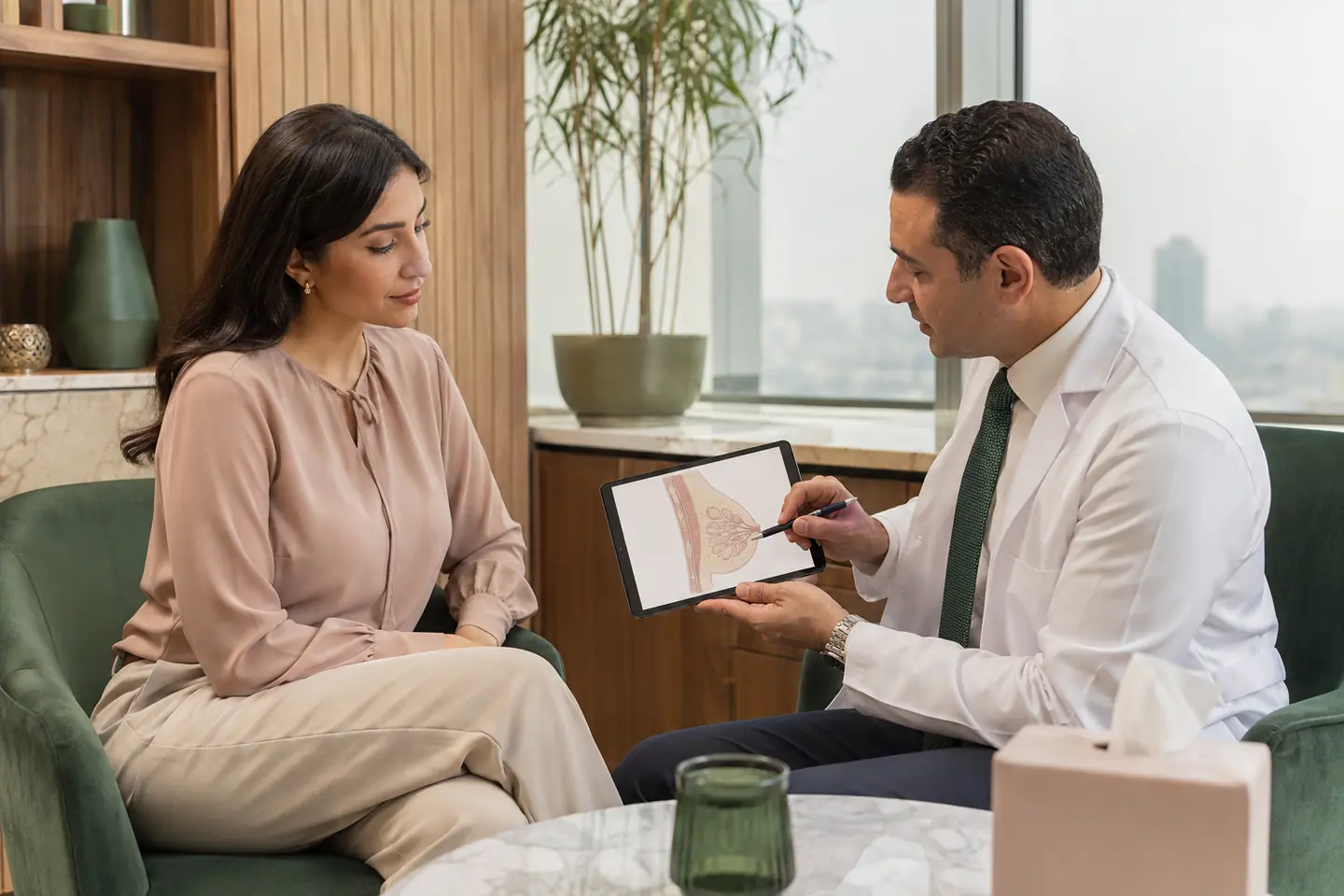
The surgeon who will perform the procedure should assess you, understand the result you hope for and discuss whether it is achievable. A safe consultation covers benefits, material risks, recovery, scars, implant or device details when relevant, possible revision, total costs and follow-up. You should have time to reflect and should never feel pressured by a limited-time offer.
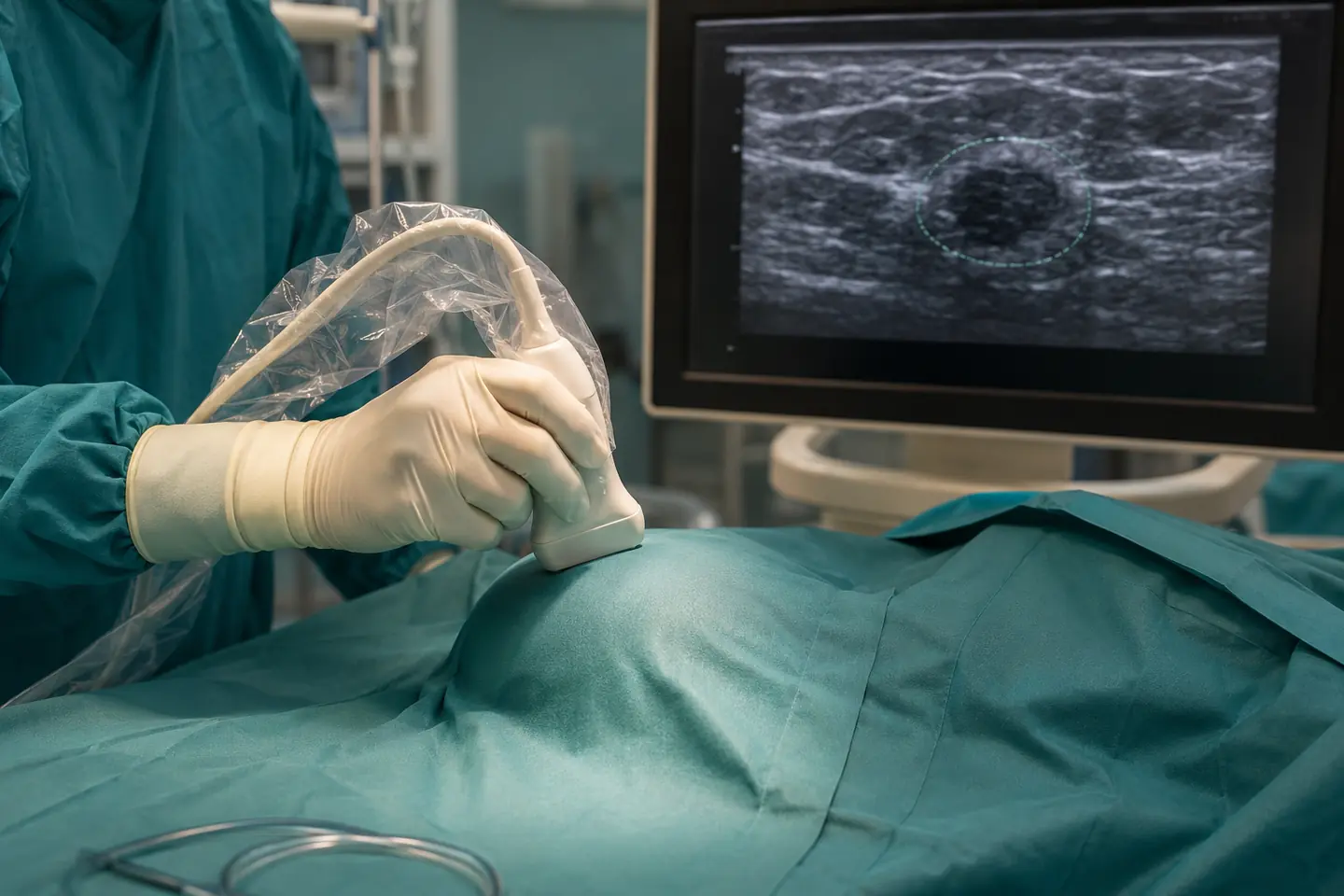
For symptoms or cancer concerns, planning may also require imaging, biopsy review and multidisciplinary discussion. For aesthetic surgery, measurements, skin quality, breast position, chest width, lifestyle, pregnancy plans and medical history all influence the plan.
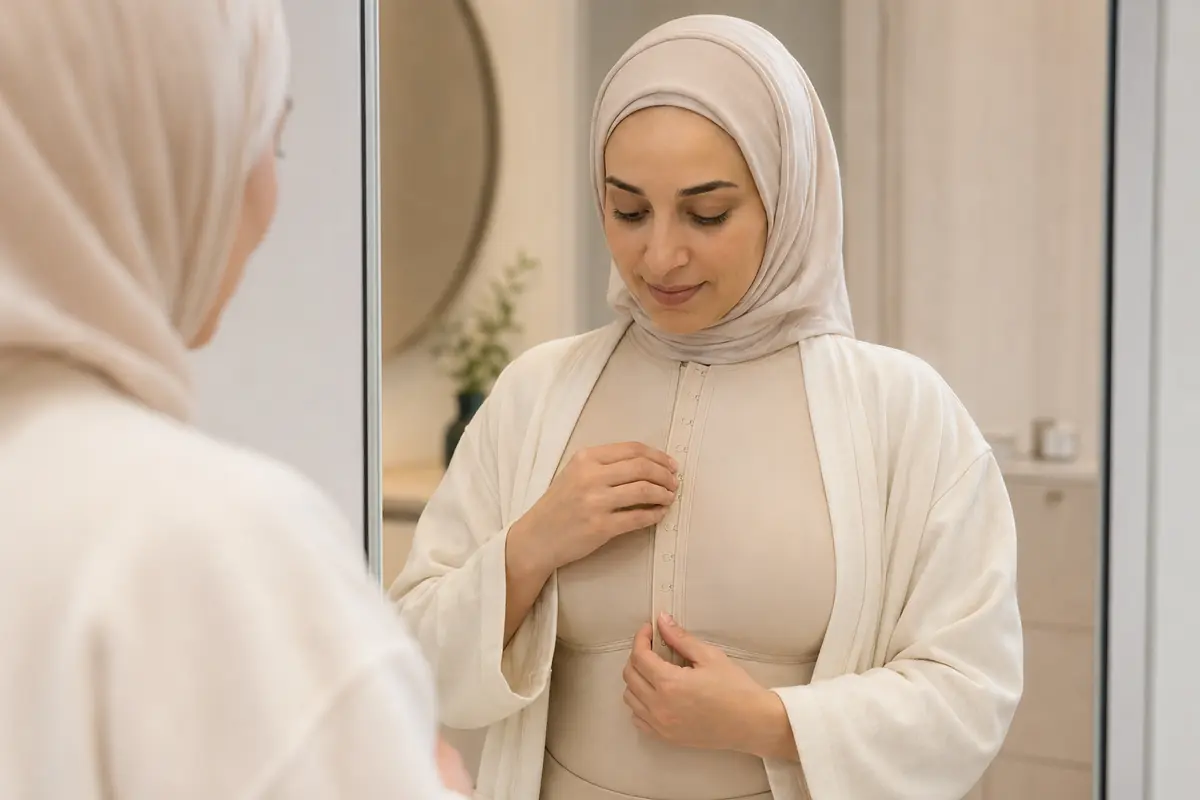
Ask about aftercare and complications
Good surgery includes a clear recovery pathway. Ask whom to contact out of hours, where reviews take place, which warning signs need urgent attention and what happens if healing is delayed or a revision is considered. A named clinical team and documented instructions are more meaningful than claims that a procedure is “risk free”. No responsible surgeon can guarantee perfection.
Dr Mostafa Sedky’s breast-surgery profile
Dr Mostafa Sedky is a consultant specialising in breast surgery. His professional profile includes membership of the Royal College of Surgeons of Edinburgh, completion of a fellowship at Baheya Breast Cancer Hospital, GMC registration and an academic role as Assistant Lecturer of Surgery at New Giza University. This combination supports a consultation that considers breast disease, reconstruction and aesthetic objectives together.
These credentials should be part of an informed decision, not a substitute for it. During consultation, patients are encouraged to ask about the proposed technique, alternatives, expected scars, recovery, follow-up and the surgeon’s experience with their specific operation.
A practical checklist
Choose the surgeon who gives you a diagnosis or aesthetic assessment you understand, discusses more than one option when appropriate, is candid about risks and limitations, and provides a safe facility and follow-up plan. It is reasonable to seek a second opinion. The best surgeon for you is the qualified professional whose expertise, communication and plan match your individual needs.
Sources reviewed
Royal College of Surgeons of England — Choosing a surgeon and hospital: https://www.rcseng.ac.uk/patient-care/cosmetic-surgery/choosing-a-surgeon-and-hospital/
General Medical Council — Guidance for cosmetic interventions: https://www.gmc-uk.org/professional-standards/the-professional-standards/cosmetic-interventions
Royal College of Surgeons of England — Your consultation with the surgeon: https://www.rcseng.ac.uk/patient-care/cosmetic-surgery/your-consultation/