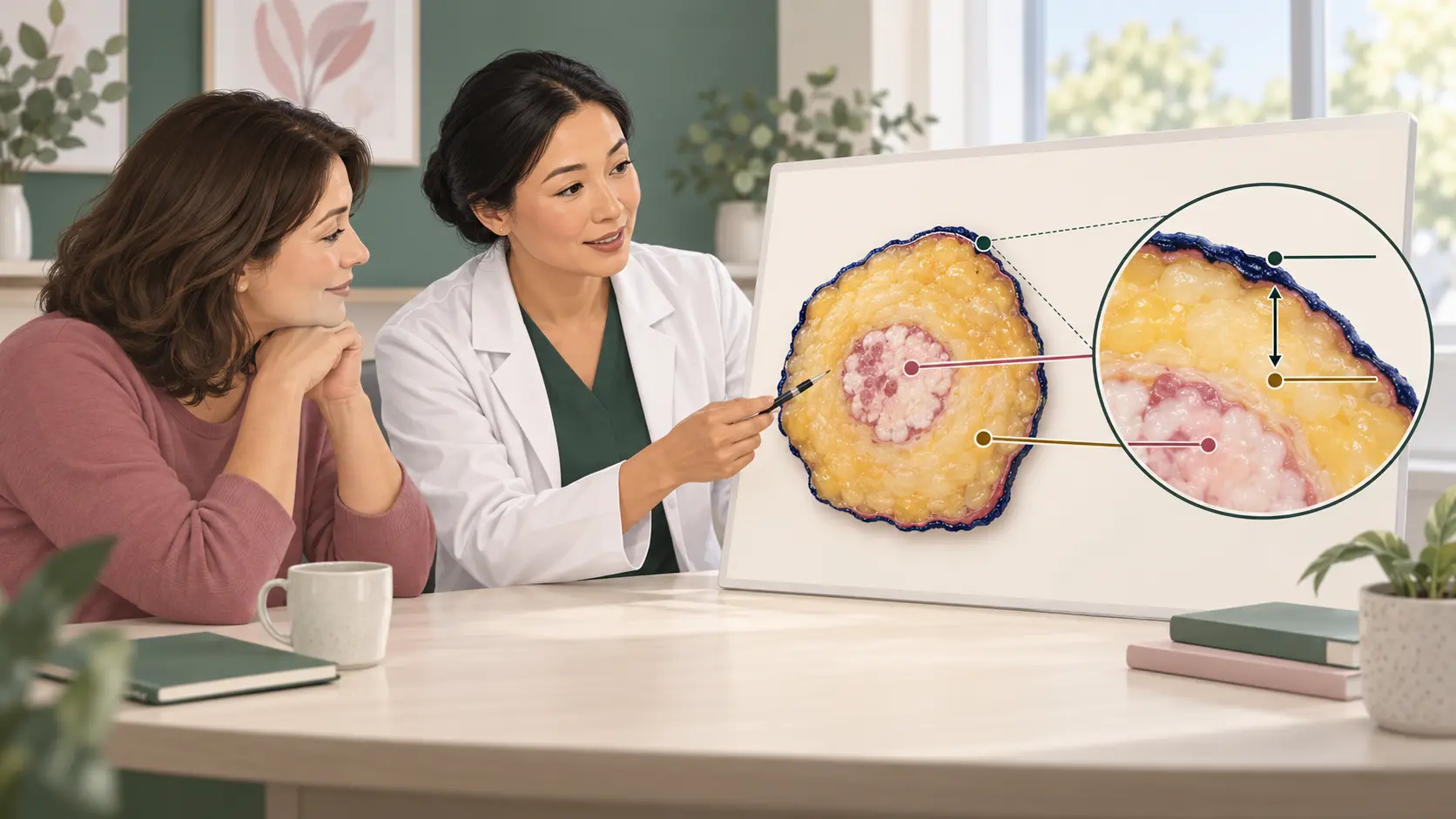
A new breast lump can be worrying. The reassuring fact is that many breast lumps are benign, particularly in younger women. However, it is not possible to confirm the cause from touch alone, so a new or persistent lump should be assessed properly.
Changes that should be assessed
Arrange a breast clinic consultation if you notice a new lump, an area that feels different from the surrounding tissue, a change in breast shape, persistent focal pain, nipple inversion, spontaneous nipple discharge or a skin change.
What happens at the appointment?
The assessment begins with your history and a careful breast and lymph-node examination. Imaging is selected according to your age, symptoms and examination. This may include ultrasound, mammography or both.
Does every lump need a biopsy?
No. Some findings have a clearly benign appearance and can be monitored. If the examination or imaging is uncertain, a core needle biopsy may be recommended to reach a reliable diagnosis.
The practical message
Do not panic, but do not ignore a persistent change. Early assessment provides clarity and allows the most appropriate follow-up or treatment plan to begin.