Arm swelling after breast-cancer treatment is not always lymphoedema, but it should not be ignored. Lymphoedema develops when lymph drainage has been reduced or damaged, allowing protein-rich fluid to collect in tissues. It can affect the arm or hand and may also involve the breast, armpit or chest wall. It may begin soon after treatment or months to years later.
What are the early signs of lymphoedema?
Early change may be subtle and may come and go. Look for a new feeling of heaviness, fullness, tightness or aching; puffiness of the hand or forearm; rings, a watch or sleeves becoming tighter; less visible knuckles; or reduced shoulder, elbow or wrist movement. Some people notice swelling of the breast, armpit or chest wall rather than the whole arm.
Do not wait for dramatic swelling. The US National Cancer Institute advises contacting the treating team when heaviness, swelling or other possible signs first appear because early lymphoedema is usually easier to control.
Who is more likely to develop it?
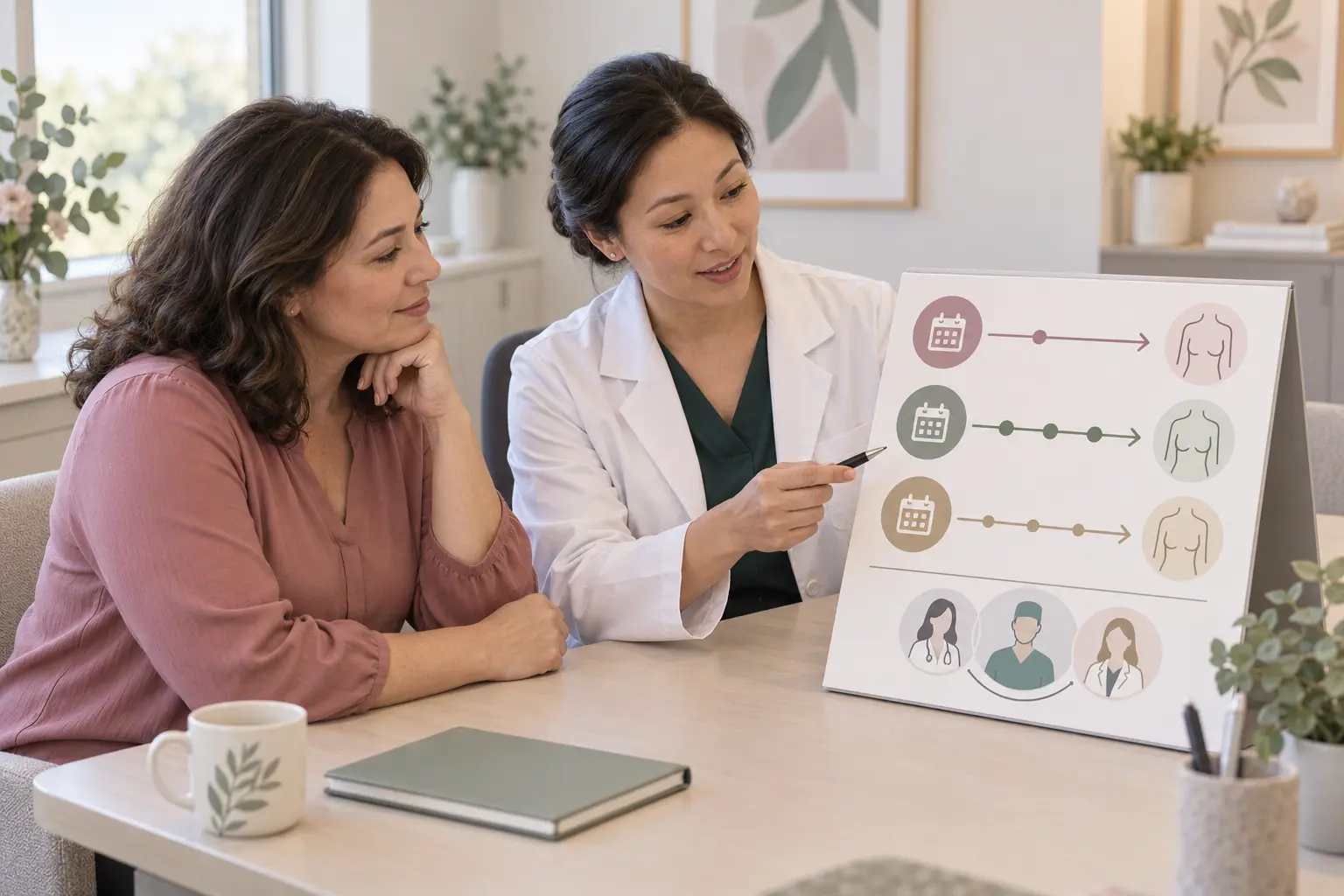
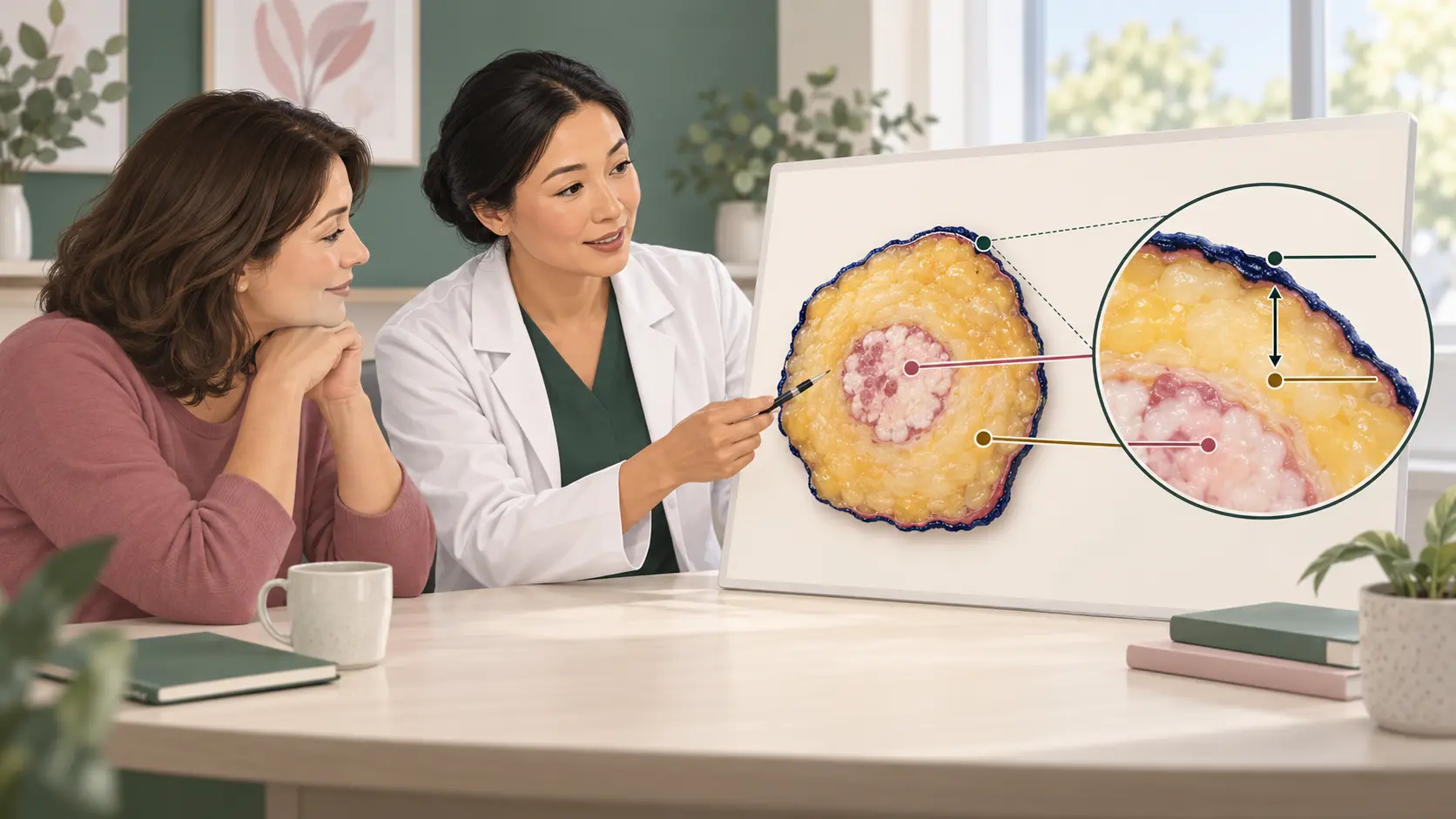
Risk depends on the individual treatment pathway. It is generally higher after removal of multiple axillary lymph nodes than after sentinel-node biopsy, and it can increase when regional lymph-node radiotherapy is required. Infection, higher body weight and more extensive combined treatment may add risk. This does not mean lymphoedema is inevitable, and even someone with a lower-risk operation should report a persistent change.
For context, read the breast cancer surgery pathway and the explanation of breast-conserving surgery and lymph-node assessment.
How is new swelling assessed?
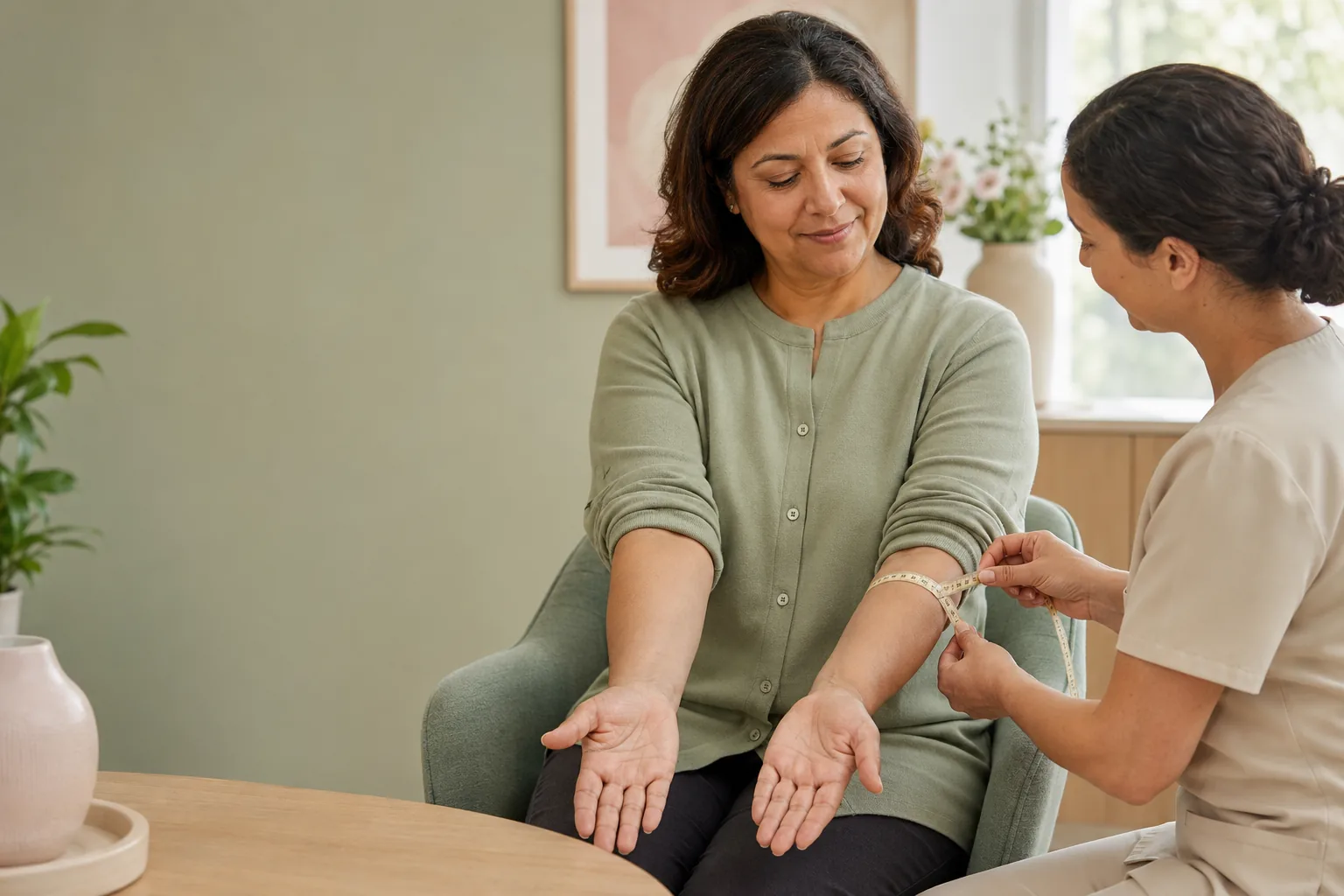
A clinician first checks the timing, distribution and speed of swelling, skin temperature and colour, wounds, pain, shoulder movement and cancer-treatment history. Arm circumference or volume and, where available, bioimpedance measurements can support assessment and follow change over time. Tests may be needed when infection, a blood clot, recurrence or another medical cause is possible.
New swelling should therefore be diagnosed before self-treatment. A sleeve that is too tight, the wrong length or used for the wrong cause can be uncomfortable or unsafe. Compression garments should be selected and fitted by a clinician or lymphoedema therapist who has assessed the patient.
What treatment may help?
Management is individual. It commonly combines education, skin care, gradual movement and exercise, and appropriately fitted compression. More established swelling may require specialist decongestive therapy. Manual lymphatic drainage can be one component for selected patients, but it is not a substitute for diagnosis and is not appropriate as an unsupervised massage for every new swollen arm.
The PREVENT randomized trial found that surveillance using bioimpedance, followed by a short course of compression when subclinical change was detected, reduced progression to chronic lymphoedema compared with tape-measurement-triggered intervention. This supports structured surveillance for suitable higher-risk patients; it does not mean every patient needs the same device or sleeve schedule.
Is it safe to move and exercise the arm?
Keeping the arm completely still is not protective. Movement should follow the wound and drain instructions from the surgical team and then progress gradually. In the PROSPER randomized trial, a physiotherapy-led exercise programme improved arm function after breast-cancer treatment without increasing lymphoedema over one year.
Start with the personalised range-of-motion plan provided after surgery. Increase load gradually, pause if swelling or pain is clearly worsening, and ask for physiotherapy review when movement is limited. General post-surgery recovery guidance should always be adapted to the operation performed.
When is urgent in-person care needed?
Seek same-day medical assessment for a suddenly swollen or painful arm, new colour change, prominent veins, or rapid worsening. Red, hot, painful skin with fever, chills or feeling unwell can indicate cellulitis and needs prompt treatment. Sudden breathlessness, chest pain, coughing blood, fainting or severe weakness requires emergency care. Rapid breast or chest-wall swelling shortly after surgery, active bleeding or severe increasing pain also requires immediate contact with the surgical team.
Choosing a team that plans long-term follow-up
A search for the best breast surgeon in Cairo should lead to objective questions: Is the axillary plan explained? Are alternatives to extensive node surgery considered when oncologically appropriate? Is there access to physiotherapy or lymphoedema assessment, and a clear route for urgent postoperative advice? Rankings and advertising cannot replace these verifiable standards.
References reviewed
NICE NG101 evidence review on non-pharmacological prevention of breast-cancer-related lymphoedema: https://www.nice.org.uk/guidance/ng101/evidence/o-non-pharmacological-prevention-of-lymphoedema-in-people-who-have-or-have-had-breast-cancer-pdf-13615398829
US National Cancer Institute — Lymphedema and cancer: https://www.cancer.gov/about-cancer/treatment/side-effects/lymphedema
International Society of Lymphology 2023 consensus document: https://doi.org/10.2458/lymph.6372
Ridner et al., PREVENT randomized trial: https://doi.org/10.1089/lrb.2021.0084
Bruce et al., PROSPER randomized trial: https://doi.org/10.1136/bmj-2021-066542
NHS — Lymphoedema: https://www.nhs.uk/conditions/lymphoedema/
This article is for general education. It does not diagnose arm swelling or replace an in-person examination, the advice of the cancer multidisciplinary team, or an individual rehabilitation plan.