Fat transfer breast augmentation, also called autologous fat grafting or lipofilling, moves fat from one part of the body to the breast. It can create a soft, natural-looking result because the added volume is the patient’s own tissue rather than an implant. It is best suited to a modest change, contour refinement or correction of selected asymmetry—not an unlimited increase in cup size.
How does breast fat transfer work?
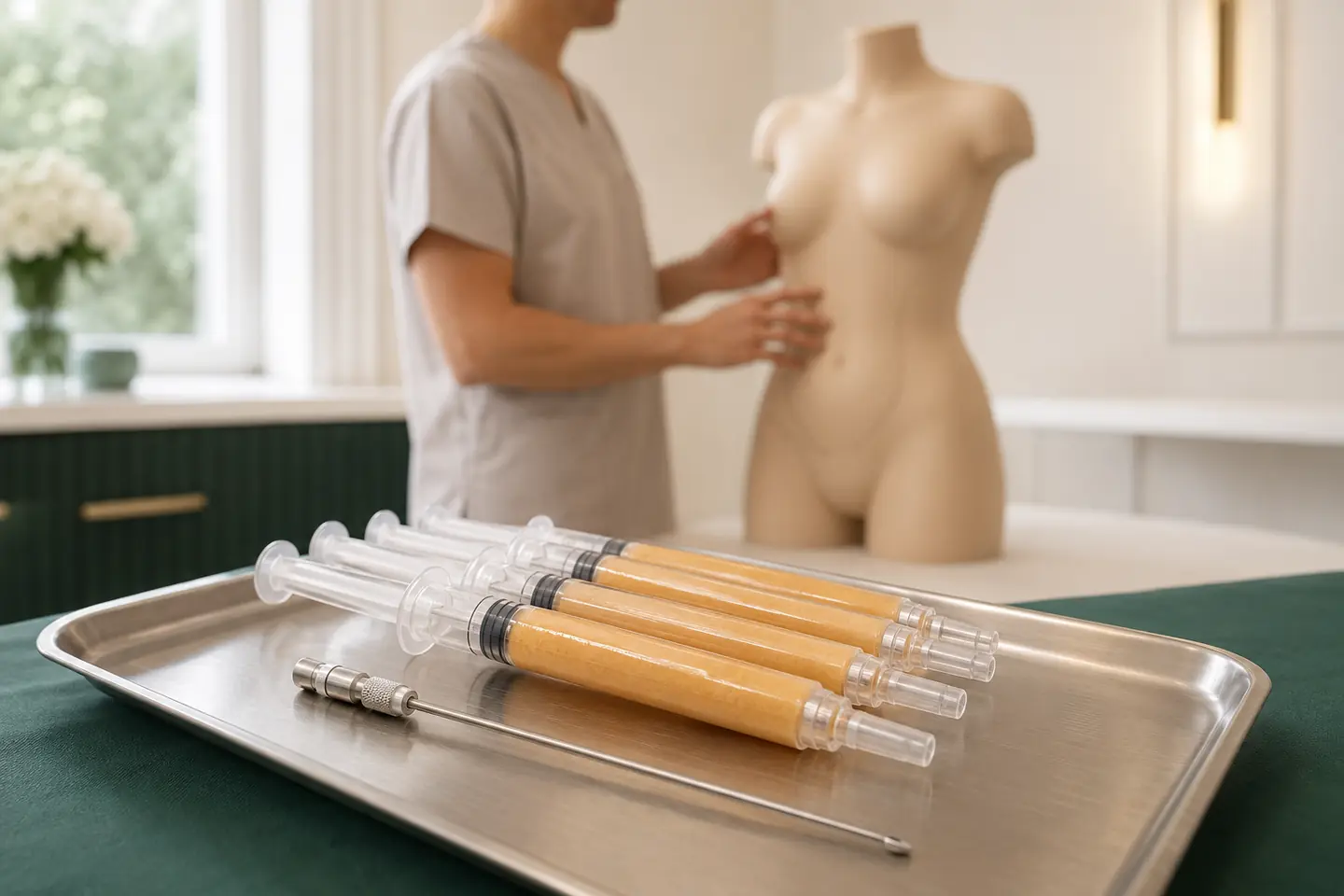
Fat is collected by liposuction from an agreed donor area such as the abdomen, flanks or thighs. It is then processed to remove excess fluid and damaged cells. The surgeon injects small droplets through fine cannulas into multiple tissue planes of the breast. Distributing tiny amounts helps each graft receive blood supply from the surrounding tissue.
The procedure therefore has two treatment sites: the breast and the donor area. The donor site is selected for safe access and contour, not simply because a patient wants all fat removed from one location.
What makes the result look natural?
Fat can soften the upper breast, improve small contour depressions, reduce visible implant edges, restore volume after pregnancy or weight loss and create subtle asymmetry correction. Because no fixed implant shell is present, the breast generally feels like natural tissue and moves with the body.
The result still depends on starting anatomy, skin elasticity, graft survival and stable weight. Fat cannot reliably raise a low nipple or remove loose skin. A lift may be needed when sagging is the main concern.
How much larger can the breast become?
Only a safe amount can be placed at one session because each fat cell needs access to oxygen and blood supply. Overfilling increases the risk of fat necrosis, oil cysts and calcification. A modest volume change is more realistic than the predictable large increase possible with an implant.
Some transferred fat is reabsorbed during healing, while the surviving portion can remain long term and change with body weight. A second session may be considered after the result stabilises. No surgeon can promise an exact cup size or 100% fat survival.
Who may be a good candidate?
Suitable candidates are generally healthy, have enough accessible donor fat, maintain a stable weight and want a subtle increase or contour correction. Smoking can reduce blood supply and graft survival. The plan must consider medications, clotting risk, previous breast surgery, pregnancy plans, breast symptoms and age-appropriate imaging.
Very slim patients may not have enough donor tissue. Patients seeking a large one-stage increase may prefer an implant or a combined strategy. Fat transfer can also be used with reconstruction or an implant, but these plans require breast-specific assessment.
Risks and breast imaging
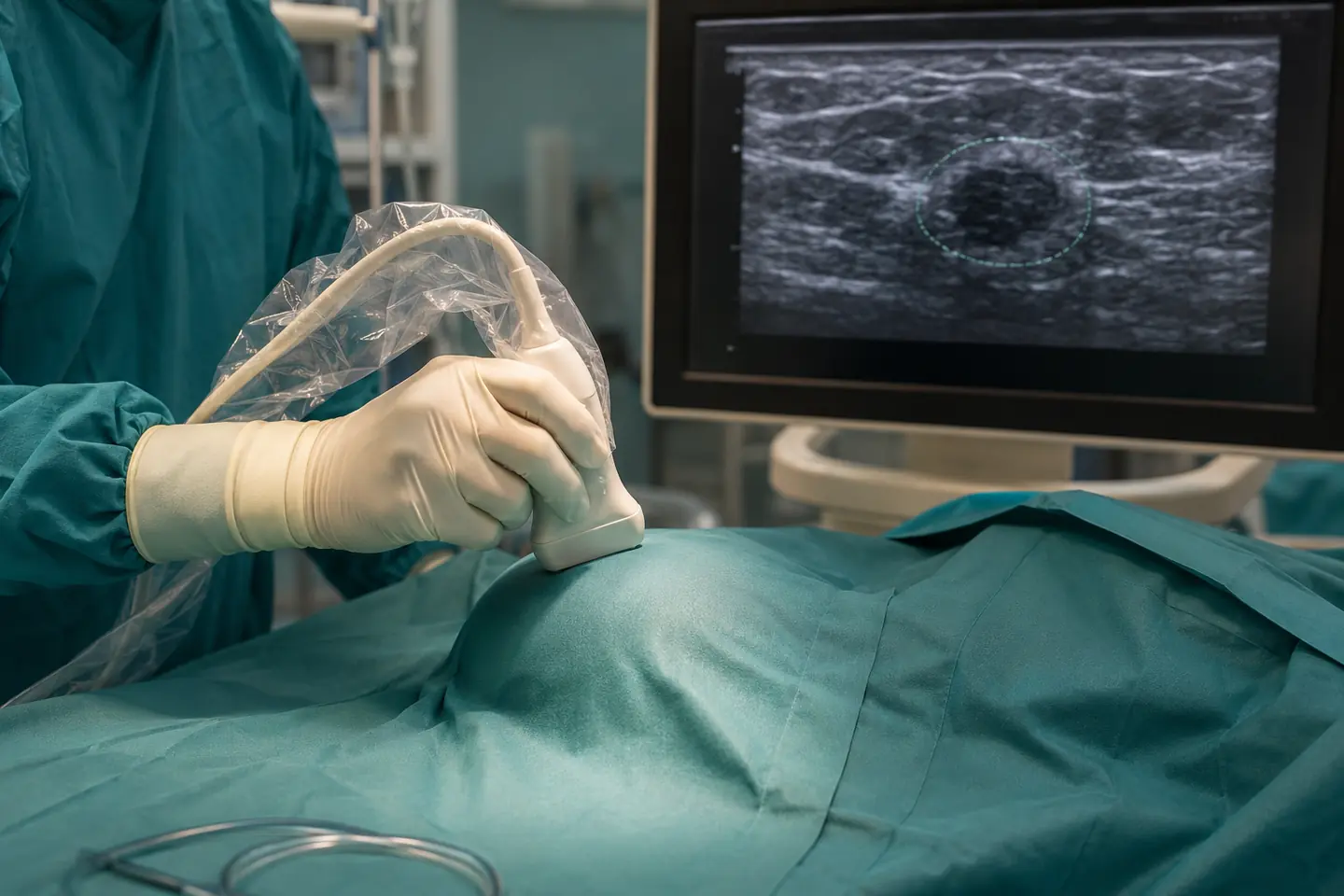
Possible complications include bleeding, infection, asymmetry, under-correction, over-correction, contour irregularity at the donor site, fluid collection and altered sensation. Fat necrosis can feel like a lump and may create oil cysts or calcifications on imaging. Experienced breast radiologists can usually assess these changes, but patients should always tell the imaging team about prior grafting.
Any new lump after fat transfer still deserves assessment rather than being assumed to be harmless. Baseline or follow-up imaging is selected according to age, history and findings.
Recovery and result
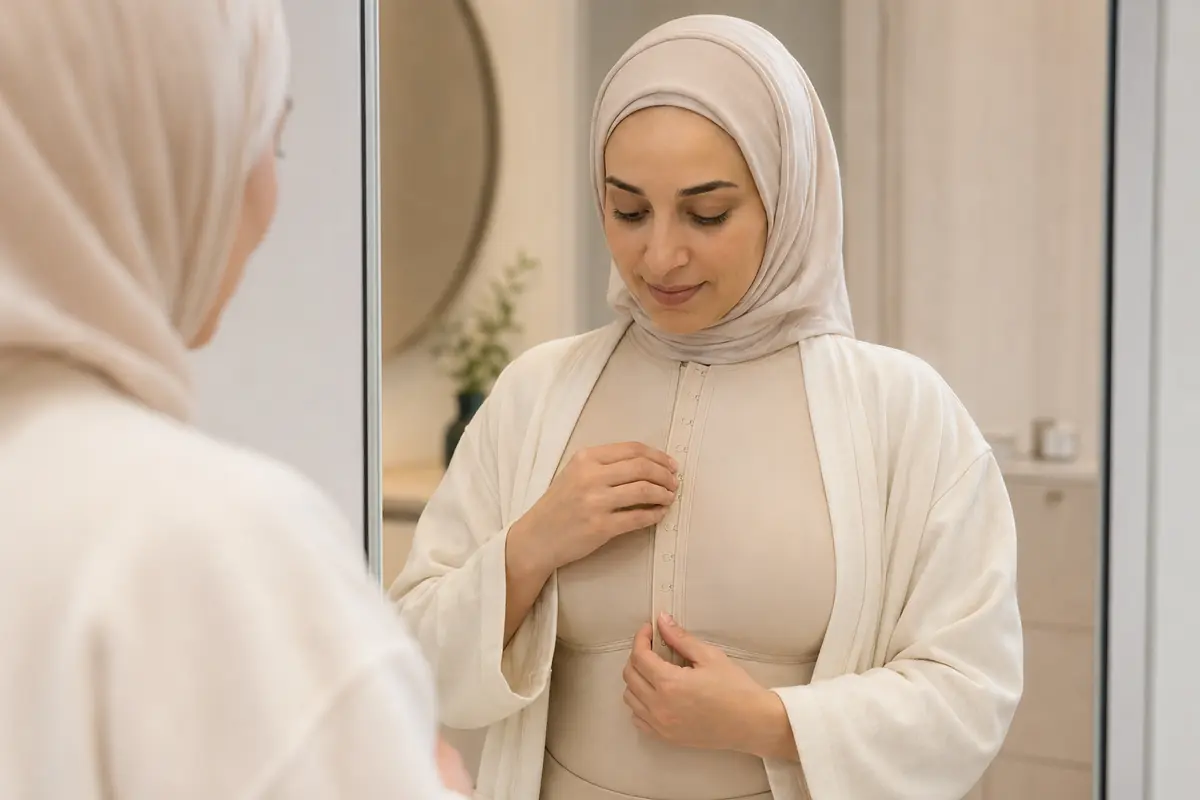
Bruising and swelling occur in both the breast and donor areas. A compression garment may be advised for the liposuction areas while direct pressure on the grafted breast is avoided according to the surgeon’s protocol. The breasts may initially look fuller because of swelling, then settle over several months as the surviving fat integrates.
The balanced choice
Fat grafting is a valuable option for patients who prioritise a natural feel, subtle shape and use of their own tissue. Its trade-offs are a limited volume increase, variable fat survival and possible need for more than one session. Careful consultant-led planning decides whether fat, an implant, a lift or a combination best matches the desired result.
Sources reviewed
American Society of Plastic Surgeons — Fat transfer for breast augmentation: https://www.plasticsurgery.org/news/articles/fat-transfer-for-breast-augmentation-the-ins-and-outs-of-this-implant-alternative
American Society of Plastic Surgeons — Breast augmentation overview: https://www.plasticsurgery.org/cosmetic-procedures/breast-augmentation
American Society of Plastic Surgeons — Small-volume natural breast augmentation: https://www.plasticsurgery.org/news/articles/small-volume-breast-augmentation-a-natural-and-subtle-enhancement