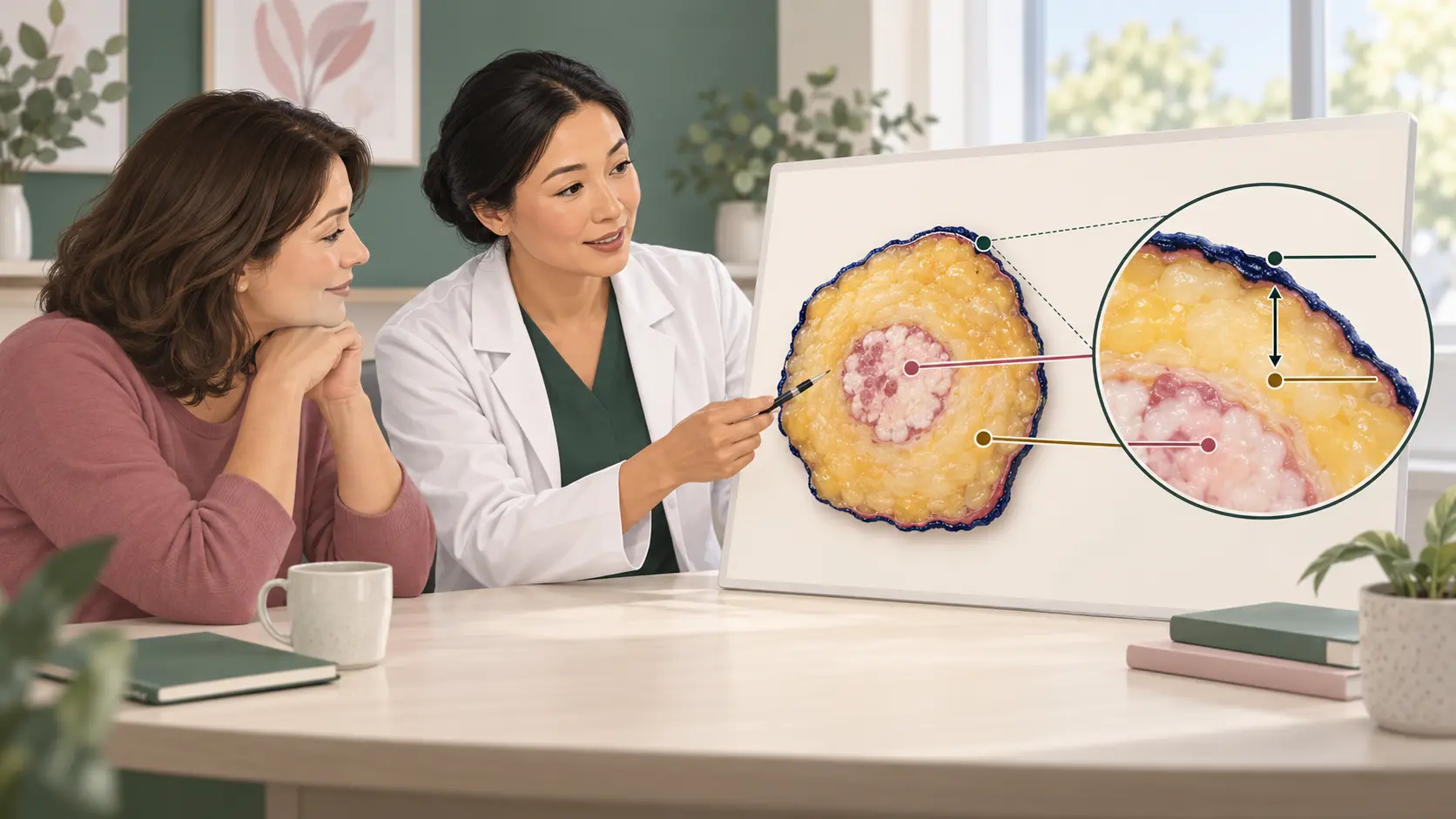
A retracted or inverted nipple turns inward or lies flatter than before instead of pointing outward. Some people have one or both inverted nipples from birth, and this can be a normal anatomical variation. The important question is whether the appearance is long-standing and stable or is a new, persistent change.
Is an inverted nipple always abnormal?
No. A nipple that has always been inverted, particularly when the same appearance is present on both sides, is commonly benign. It may temporarily come outward with cold or gentle stimulation. Pregnancy, breast fullness and breastfeeding can also make a nipple look temporarily flatter.
A new nipple retraction is different. Tissue inside the breast can shorten or pull on the milk ducts, drawing the nipple inward. This does not automatically mean cancer, but it should be examined rather than diagnosed from a photograph or by trying to pull the nipple out at home.
Common non-cancerous causes
Age-related changes can shorten the milk ducts, particularly around and after menopause. Mammary duct ectasia is another benign cause: one or more ducts behind the nipple widen, thicken or become blocked. It may cause tenderness, sticky greenish or dark discharge, inflammation and sometimes nipple inversion.
Breastfeeding, breast engorgement, mastitis or an abscess can alter the nipple temporarily. Infection is more likely when there is pain, warmth, redness, swelling, fever or feeling unwell. Scar tissue after breast surgery, radiotherapy, injury or a previous infection can also pull the nipple inward. Other benign breast conditions may occasionally change the nipple shape.
When can nipple retraction be a warning sign?
Breast cancer is one possible cause of a nipple that newly turns inward or changes direction because a tumour can pull on ducts or surrounding tissue. The concern is greater when the change is recent, affects only one breast, cannot be reversed, or is becoming more noticeable.
Arrange a prompt breast assessment if the nipple change is accompanied by any of the following:
• a breast or underarm lump • skin dimpling, puckering or an orange-peel appearance • spontaneous clear or bloodstained nipple discharge • a persistent red, scaly, crusted or ulcerated nipple rash • a change in breast size, contour or shape • rapid redness, warmth or swelling of much of the breast • enlarged glands under the arm or near the collarbone
Most people with one of these symptoms will not have cancer, but examination is the safe way to find the cause. Do not wait for a routine screening mammogram if you notice a new symptom; screening is intended for people without symptoms.
What happens at the breast clinic?
The surgeon will ask when the change began, whether the nipple ever comes outward, and whether there is pain, discharge, infection, pregnancy, breastfeeding, surgery or injury. Both breasts and the lymph nodes are examined.
Imaging is selected according to age and clinical findings. It may include breast ultrasound, mammography or both. If a suspicious area is identified, a needle biopsy may be recommended. Persistent skin change on the nipple may need a small skin biopsy to exclude Paget disease of the nipple.
Can an inverted nipple be corrected?
Treatment depends on the cause. Infection or duct inflammation is treated first. A stable congenital inversion may need no treatment, although breastfeeding advice or corrective surgery can be discussed if it causes difficulty or distress. Cosmetic correction should only be considered after a new or unexplained inversion has been properly assessed, because surgery can affect sensation and breastfeeding.
The practical message
A nipple that has always looked inward and has not changed is usually reassuring. A nipple that becomes newly retracted—especially on one side—needs a clinical breast examination. Early assessment usually identifies a benign cause and avoids prolonged worry; when there is a serious cause, timely diagnosis matters.
Sources reviewed
US National Cancer Institute — Definition of inverted nipple: https://www.cancer.gov/publications/dictionaries/cancer-terms/def/inverted-nipple
US National Cancer Institute — Benign and precancerous breast conditions: https://www.cancer.gov/types/breast/causes-risk-factors/benign-breast-lumps
NHS — Symptoms of breast cancer in women: https://www.nhs.uk/conditions/breast-cancer-in-women/symptoms-of-breast-cancer-in-women/