A breast abscess is a collection of pus caused by infection. It often produces a painful lump, warmth, redness and swelling, sometimes with fever or feeling unwell. Abscesses can occur during breastfeeding or outside lactation. Prompt assessment matters because antibiotics alone may not clear a formed fluid collection.
Why use breast ultrasound?
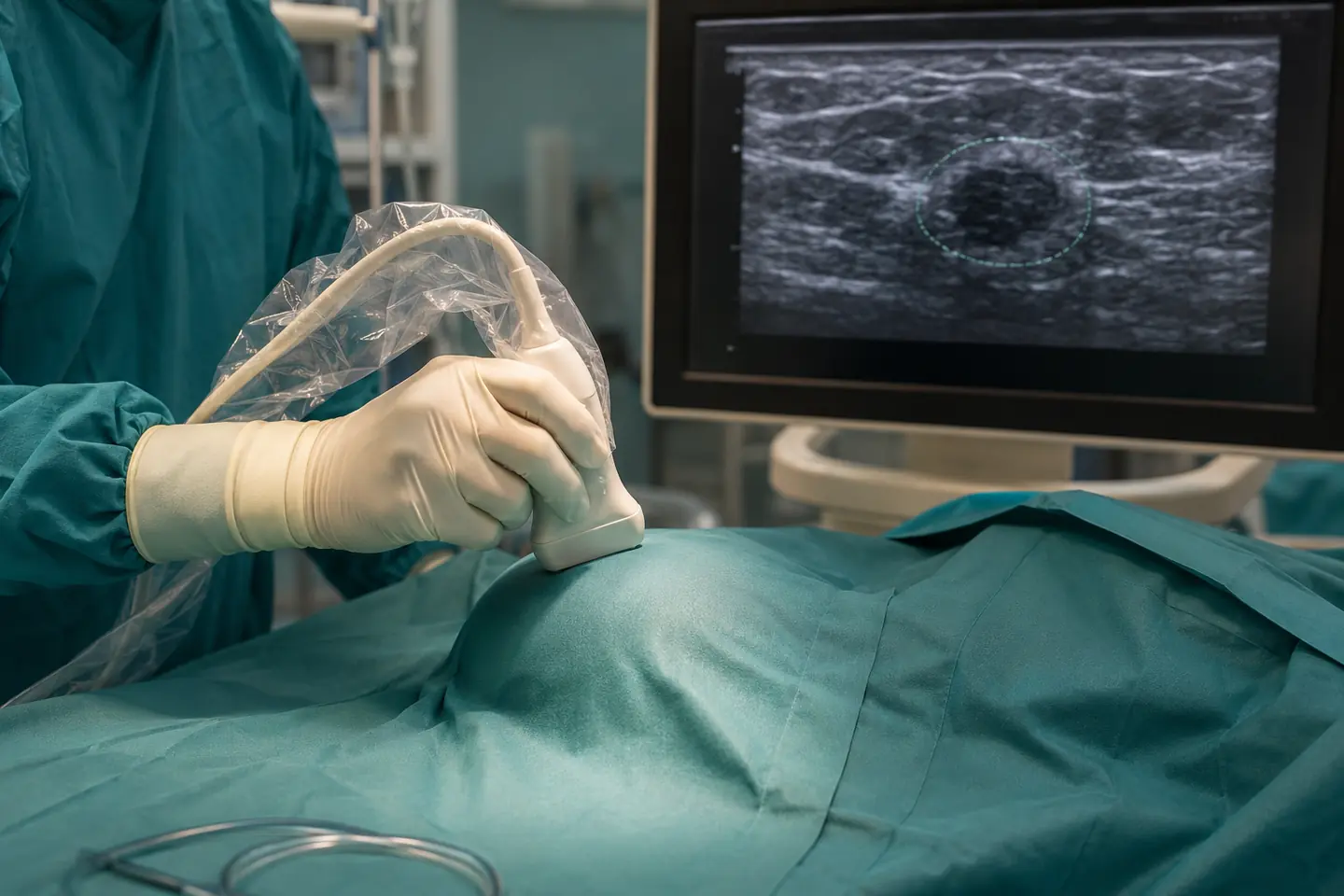
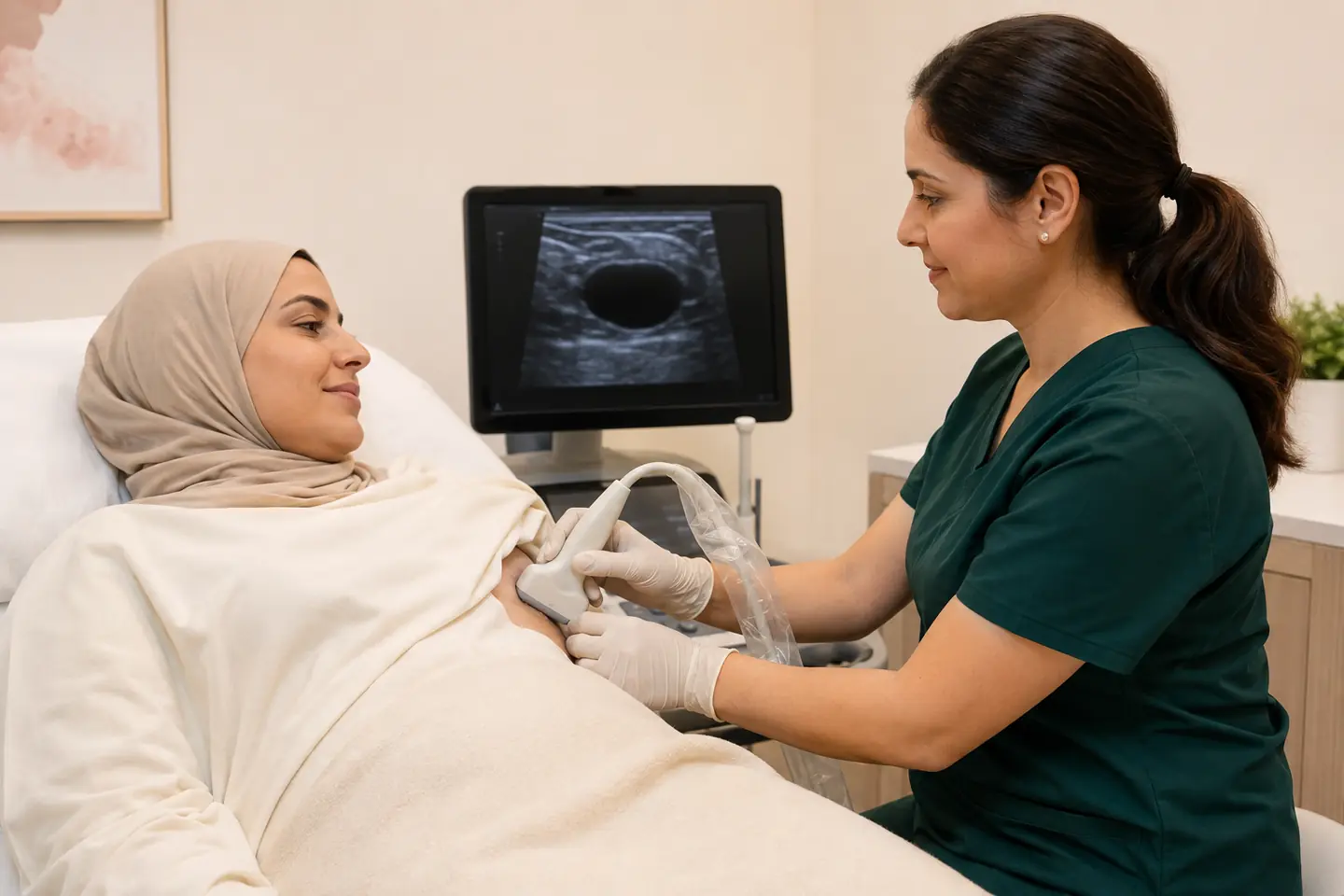
Ultrasound can distinguish a drainable fluid collection from inflamed tissue without a cavity. It shows the abscess size, depth, internal pockets and its relationship to the skin, nipple and chest wall. It can also guide a needle into the collection in real time while avoiding nearby structures.
Not every painful red breast is an abscess. Mastitis may be present before a collection forms. A persistent or unusual mass, especially outside breastfeeding, may need additional imaging or biopsy to exclude an underlying lesion.
What happens during ultrasound-guided drainage?
After cleaning the skin and applying local anaesthetic, the clinician advances a needle into the collection under ultrasound guidance. Pus is aspirated and usually sent for microbiology culture so antibiotic treatment can be adjusted. The cavity may be gently irrigated. For a larger cavity or fluid that reaccumulates, a small catheter may be left temporarily to allow continued drainage.
One aspiration may be enough, but repeat ultrasound and drainage are sometimes needed. The visit plan also includes pain relief, antibiotics when indicated and review of the skin and systemic symptoms.
Advantages compared with an incision
Needle or catheter drainage generally uses a tiny puncture rather than a larger cut. In suitable cases this can mean less tissue disruption, a smaller scar, easier wound care and continued breastfeeding. Meta-analysis of randomised studies found similar cure and recurrence outcomes to incision and drainage, with shorter healing time and less breast fistula, although some cases still fail aspiration.
These benefits do not make aspiration appropriate for every abscess. Treatment is selected according to clinical stability, abscess size and complexity, skin condition and access to reliable repeat review.
When is surgical drainage still needed?
An incision may be recommended when the abscess is very large, has multiple difficult pockets, contains very thick material, is associated with damaged or necrotic skin, or does not improve after repeated aspiration. Urgent hospital care may be required for sepsis, rapidly spreading infection or significant immune suppression.
Recurrent abscesses near the nipple outside breastfeeding can be related to smoking, duct disease or a fistula and may need definitive surgery after the acute infection settles. Diabetes and other conditions that affect immunity should also be considered.
Breastfeeding and milk supply
For a lactational abscess, effective milk removal is usually part of treatment. Breastfeeding or expressing from the affected breast can often continue, but advice should be individualised according to wound position, pain, medication and the baby’s health. Abruptly stopping milk removal may worsen stasis. A lactation professional can help with attachment, oversupply and nipple trauma.
When to seek urgent help
Seek same-day medical care for fever with a hot, painful or rapidly swollen breast, especially if you feel faint, confused or very unwell. After drainage, increasing pain, spreading redness, persistent fever, heavy bleeding, catheter displacement or failure to improve should be reviewed promptly.
The practical message
Ultrasound-guided aspiration or catheter drainage is an effective, less invasive first option for many uncomplicated breast abscesses when combined with appropriate antibiotics and follow-up. The safest plan is based on ultrasound findings, culture results and response—not on size by touch alone.
Sources reviewed
PubMed — Meta-analysis of needle aspiration versus incision and drainage: https://pubmed.ncbi.nlm.nih.gov/37350731/
PMC — Randomised trial of ultrasound-guided aspiration versus incision and drainage: https://pmc.ncbi.nlm.nih.gov/articles/PMC10800148/
Academy of Breastfeeding Medicine — Mastitis spectrum clinical protocol: https://www.bfmed.org/protocols