A biopsy report saying “benign” can be reassuring. The next question is whether that result explains the breast finding that prompted the biopsy. Clinicians call this imaging–pathology concordance. If the reports do not fit together, further assessment is needed before the team can close the investigation. ASBrS concordance standard
What do concordant and discordant mean?
Concordant means the examination, imaging and tissue result form a consistent explanation. Discordant means there is an unresolved mismatch—for example, benign tissue that does not adequately explain a suspicious imaging finding. A mismatch is not itself a cancer diagnosis; it is a reason to check the evidence together. ASBrS concordance standard
Why might a second sample be needed?
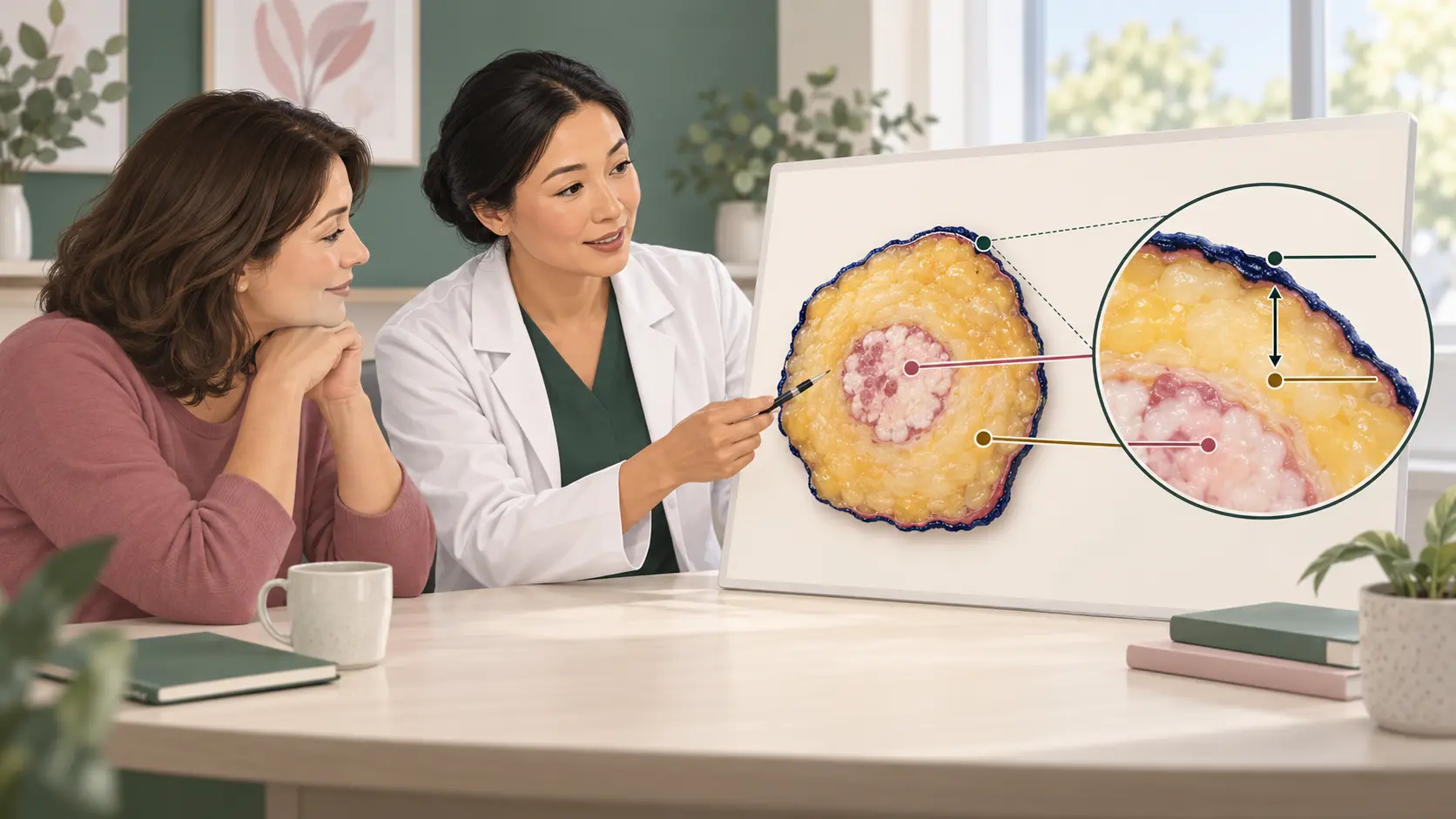
A core-needle biopsy samples part of an abnormality. The pathologist examines that tissue; the radiologist checks whether the result explains the target on the scan. A sample may occasionally miss the target or underestimate a finding. Even a technically completed procedure may therefore leave uncertainty. ACR/RSNA patient guide, reviewed June 2026
What happens when the results disagree?
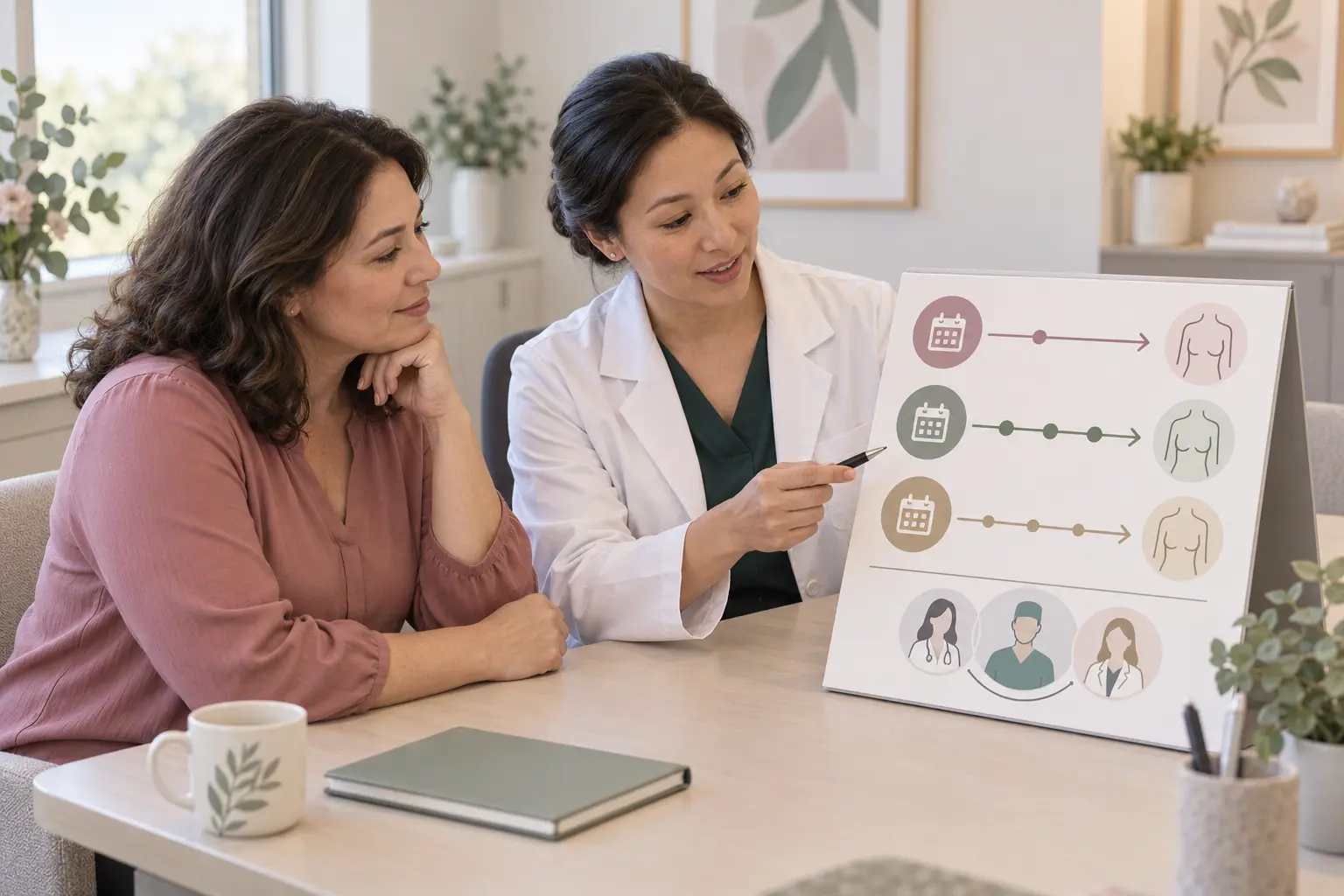
The breast team reviews the examination, imaging and pathology together. Confirmed discordance can lead to another image-guided needle biopsy or surgical excision for diagnosis. The method depends on the target, its location and how it can be sampled accurately; vacuum-assisted sampling is one available technique. A routine follow-up scan should not silently replace the recommended investigation of a mismatch. Ask the team to explain its recommendation and timing. ASBrS image-guided biopsy guidance
Management of a confirmed, concordant fibroadenoma is a separate decision, covered in our fibroadenoma guide. For an unexplained new lump, see breast-lump assessment.
Take these questions to the results appointment
Ask: “What is the exact tissue diagnosis, and does it explain the specific area on my scan?”
Ask: “Has concordance been documented? If not, who will review the reports together?”
Ask: “Do I need another needle sample or an excision, and why is that option appropriate for this target?”
Ask: “When should the next step happen, who will contact me, and whom should I call if I hear nothing?”
Bring the imaging report and images if available, the biopsy report and a list of your medicines. When comparing clinicians after searching for “best breast surgeon in Cairo”, use objective criteria: verifiable qualifications, experience in breast assessment, coordination with radiology and pathology, and a clear follow-up plan. See our surgeon-selection criteria.
While waiting for the plan
Result times vary. Confirm how and when your team expects to communicate, and contact them if that agreed time passes. Follow your own biopsy aftercare and medication instructions; ask before changing prescribed medicines. NHS biopsy information
Report a growing or persistent unexplained lump, a new underarm lump, nipple change, non-milk discharge or skin dimpling promptly, even after a reassuring report. These findings need assessment but do not by themselves establish cancer. NCI breast symptom guidance
Evidence and scope
Sources checked on 15 September 2026. This guide concerns agreement between a breast needle-biopsy result and the finding sampled. It does not interpret an individual pathology report or set a universal follow-up interval. The safety guidance and six direct references below complete the guide.