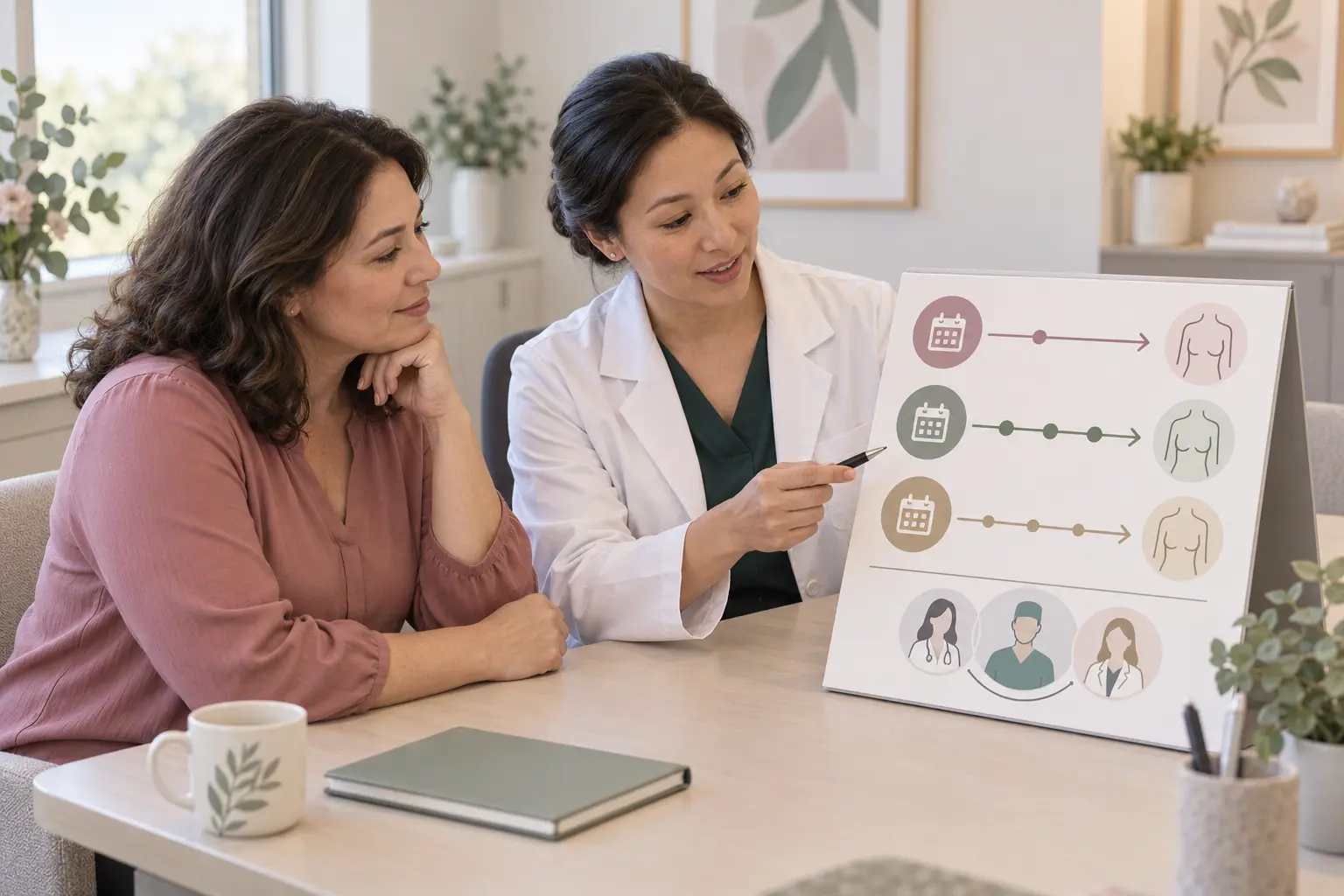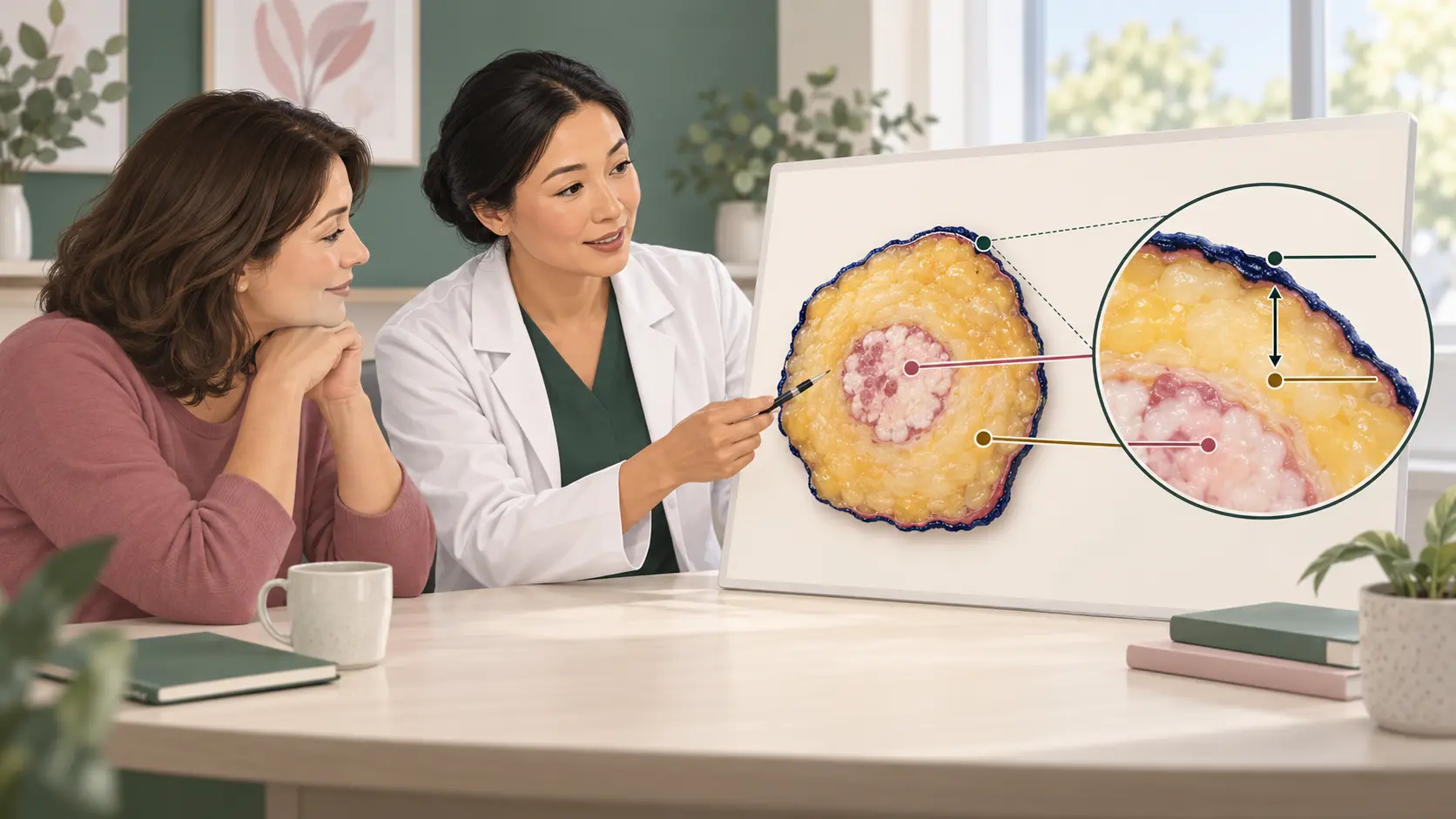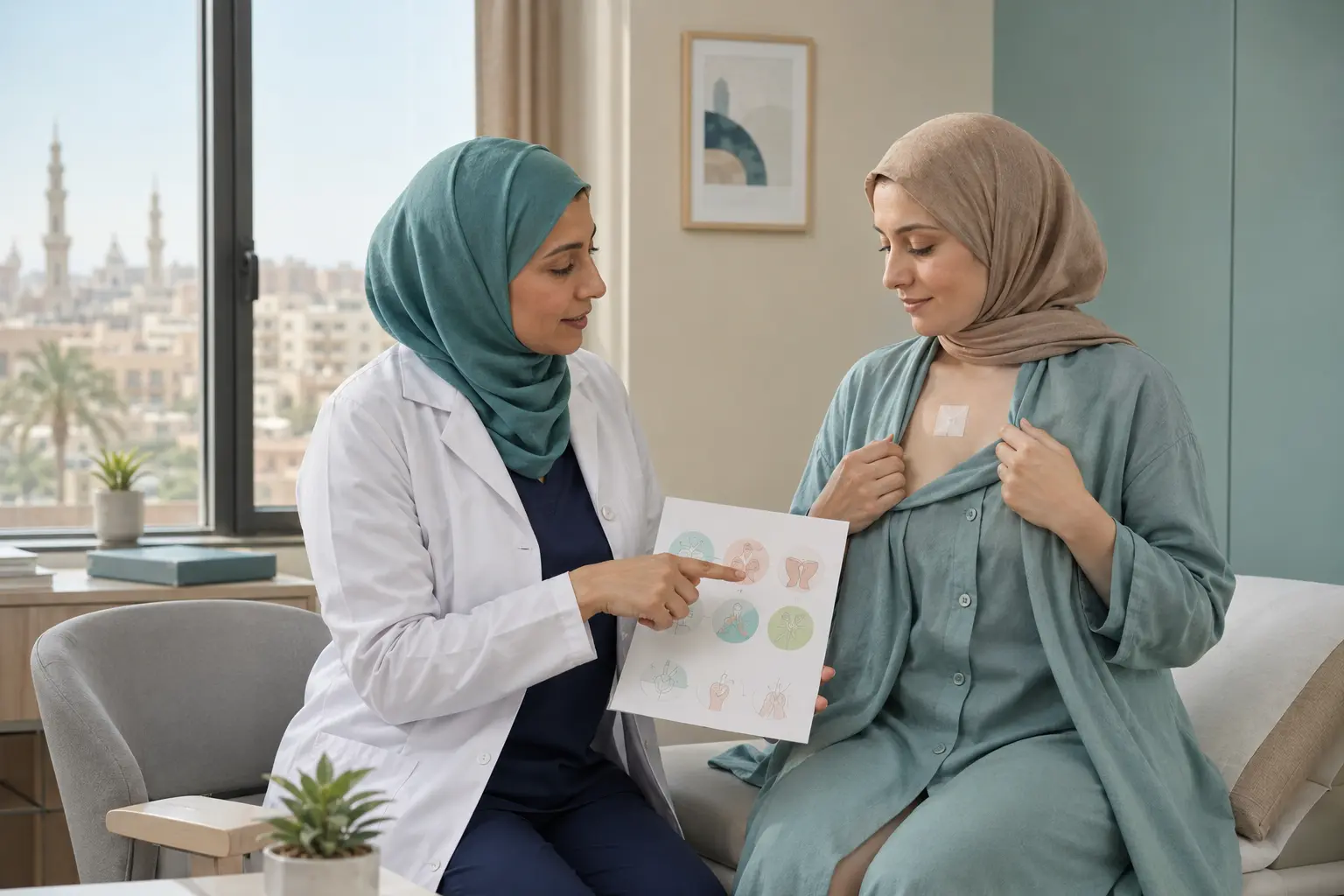
A breast-surgery wound changes from day to day. Mild bruising, swelling, tenderness, numbness and firmness near the incision can occur during uncomplicated healing, while an infection usually produces a change that is new, spreading or getting worse. Knowing the pattern matters more than judging one photograph in isolation.
This guide applies broadly after breast-conserving surgery, mastectomy, benign-lump removal, reduction, lift and reconstruction. Your own discharge instructions take priority because dressings, skin glue, stitches, drains and the timing of showering differ between operations.
What can be normal while a breast wound heals?
During the first days, some bruising, swelling and tenderness are expected. These changes should generally stabilise and then improve rather than expand. A small area of numbness, tingling or brief electric-shock sensations can occur as cut skin nerves recover. Firm ridges, “lumps and bumps” beneath or beside the incision may represent healing tissue and scar formation; they often soften gradually over weeks or months.
A small mark on the first dressing may be expected if your team warned you about it. Fresh bleeding, an enlarging wet patch or repeated leakage is different and should be reported. Do not use another patient’s recovery timeline as a test: the operation, breast size, reconstruction, drains, medicines and health conditions all alter the course.
For the wider recovery picture, see support bras, pain, swelling and seroma after breast surgery.
Which changes suggest a surgical-site infection?
Contact the surgical team the same day if redness is spreading away from the incision; the skin is becoming hotter or more swollen; pain is increasing after it had begun to settle; or cloudy, yellow, green or foul-smelling fluid appears. Wound separation, fever, chills or feeling suddenly unwell are also warning signs. The CDC advises contacting a healthcare professional immediately for redness and pain at the surgical site, drainage or fever.
An infection can involve the skin, deeper tissue or implanted material. It cannot be confirmed from colour alone. A clinician may need to examine the breast, check vital signs, sample fluid or open and drain a collection. Antibiotics are sometimes needed, but their choice and duration depend on the clinical findings and likely organism. Do not start leftover antibiotics because they may be unsuitable and can delay the correct assessment.
What else can resemble infection?
A seroma is a collection of clear or straw-coloured fluid beneath the wound. It may feel like a soft, mobile swelling and is common after some breast and lymph-node operations. Small, comfortable seromas may be observed, while a large, tense, painful or rapidly enlarging swelling needs review; aspiration is not automatically required and should be performed only when clinically indicated.
A haematoma is a blood collection. Rapid one-sided swelling, increasing tightness or severe pain, expanding bruising, active bleeding or a dressing that becomes soaked requires immediate contact with the operating team. A very pale, blue, grey or black nipple or skin edge, new blistering, or a wound that is pulling apart also requires urgent examination because circulation or wound integrity may be threatened.
An itchy rash matching adhesive edges may be a contact reaction, but it should still be discussed with the team because allergy and infection can coexist. New arm swelling after breast-cancer treatment has a separate set of causes and red flags.
How should I look after the wound at home?
Follow the written plan for your exact operation. Before touching a dressing or drain, wash and dry your hands. Keep other people and pets away from the wound. Do not peel skin glue or adhesive strips, remove a drain, or change a sealed dressing unless instructed. Showering may be allowed with some closures, but soaking in a bath or swimming usually waits until the wound is healed and the team agrees.
Do not apply alcohol, peroxide, iodine, herbal mixtures, powders, cosmetic creams or antibiotic ointment unless the surgical team prescribed it. These products can irritate tissue, interfere with adhesives or hide a developing problem. Keep the follow-up appointment even if the wound looks well. If you have diabetes, ask how to manage glucose around surgery; if you use nicotine, tell the team and seek cessation support because smoking is associated with poorer wound healing and more infection.
The WHO and NICE recommendations focus on a coordinated prevention pathway before, during and after surgery. A breast-specific case-control study by Olsen and colleagues likewise found that infection risk reflects several patient and procedural factors, including potentially modifiable aspects of antibiotic prophylaxis. The practical message is not to calculate a personal risk from one paper, but to use a team with a documented prevention and follow-up process.
When is in-person or emergency care needed?
Arrange urgent same-day assessment for spreading redness or heat, increasing pain or swelling, cloudy or foul-smelling discharge, wound opening, fever, chills or feeling significantly unwell. Contact the operating team immediately for rapidly increasing one-sided breast swelling, active bleeding, a blood-soaked dressing, severe pressure pain or concerning skin or nipple colour change.
Call emergency services for sudden breathlessness, chest pain, fainting, confusion, coughing blood or severe weakness. A photograph sent through an approved clinical channel can help show change over time, but it cannot assess circulation, depth, vital signs or a fluid collection and must not delay direct care.
Choosing a surgeon and follow-up pathway
If you search for the best breast surgeon in Cairo, compare objective standards instead of promotional rankings: breast-specific qualifications, a clear infection-prevention protocol, written wound and drain instructions, a named route for out-of-hours advice, and the ability to examine a deteriorating wound promptly. The breast cancer surgery pathway should also explain how postoperative findings connect with pathology and oncology follow-up.
References reviewed
CDC — Surgical Site Infection Basics: https://www.cdc.gov/surgical-site-infections/about/index.html
NICE NG125 — Surgical site infections: prevention and treatment: https://www.nice.org.uk/guidance/ng125/chapter/recommendations
World Health Organization — Global guidelines for the prevention of surgical site infection, second edition: https://www.who.int/publications/i/item/9789241550475
University Hospitals Sussex NHS — Going Home After Minor Breast Surgery: https://www.uhsussex.nhs.uk/resources/going-home-after-minor-breast-surgery/
Olsen MA et al. Risk Factors for Surgical Site Infection after Major Breast Operation. Journal of the American College of Surgeons. 2008;207(3):326–335: https://doi.org/10.1016/j.jamcollsurg.2008.04.021
This article is for general education and does not diagnose a wound, replace an in-person examination, or override the discharge instructions from your operating team. If symptoms are severe, rapidly worsening or you are unsure how urgent they are, seek licensed medical care rather than waiting for an online reply.